Plumber in Atlanta, GA, for Old Pipes and Main-Line Trouble
Most plumbing advice is written for a house built in the last thirty years. A lot of Atlanta was built in the first thirty years of the last century, and its pipes behave accordingly. This page is about finding a plumber for that house: what is likely wrong, what to do before anyone arrives, and how to read the quote.
What breaks in a house this age
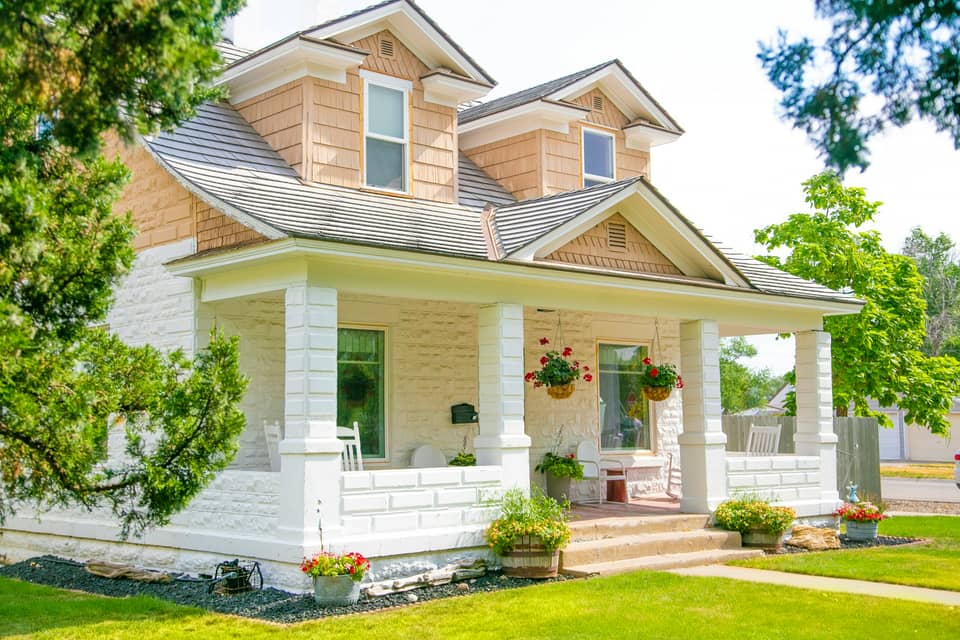
The east side of the city, from Inman Park out through Kirkwood, and the older streets to the south and west, Grant Park, Ormewood Park, West End, were mostly built as streetcar suburbs between the 1880s and the 1930s. The plumbing in those houses has usually been changed piece by piece. A bathroom redone in the 1990s, a water heater swapped twice, a kitchen drain re-plumbed in PVC. What usually has not been touched is the pipe nobody can see: the drain under the floor and the lateral out to the street.
Outside the house: clay
The sewer lateral on a pre-war Atlanta house is very often vitrified clay, laid in sections a few feet long with a bell-and-spigot joint every few feet. Clay itself lasts. The joints do not. Old mortar or tar packing cracks, the ground settles a little, and the seam weeps just enough moisture to draw roots from the nearest oak.
Under the house: cast iron
Inside the foundation the drain is often cast iron. It rusts from the inside and from the bottom up, because that is where the water sits. The first sign is usually a slow drain that keeps coming back after it is cleared, or a rust-coloured stain along a horizontal run in the crawlspace. Late in its life the bottom of the pipe can rot through while the top still looks solid.
Post-war houses: watch for Orangeburg
Cottages and ranch houses from roughly the late 1940s into the 1960s, common in East Atlanta, around Lakewood Heights and further out, sometimes went in with bituminous fibre sewer pipe, sold as Orangeburg. It is essentially tar-soaked pressed fibre. Over decades it softens and squashes oval under the weight of soil. On camera it looks like a pipe that has been stepped on, and it cannot be patched in any lasting way.
Read the symptoms before you call
Plumbers ask the same questions on the phone because the answers tell them which problem they are walking into. You can work most of it out yourself in a few minutes, and it makes the first conversation shorter.
- One fixture slow, everything else fine: a branch drain. Usually a straightforward clear.
- Several fixtures slow at once, or the lowest drain in the house backs up when something upstairs empties: the main line.
- Gurgling in a toilet when the washing machine pumps out: the main line is partly blocked and air is being pushed back up.
- Problems that come back every twelve to eighteen months: roots, almost always. Clearing alone will not end it.
- Water on the basement floor after a heavy storm, and only then: water getting into the sewer from outside, or a public main surcharging. Different conversation.
- A sewage smell outside with no backup inside: a cracked lateral or a failed cleanout cap. Worth a camera.
Find the cleanout
Most houses have a sewer cleanout: a capped pipe, usually three or four inches across, sticking up a few inches out of the ground. In Atlanta it is usually outside, along the side of the house or in the front yard between the foundation and the street. Some older houses have one inside, low on the foundation wall in a basement. Some have none at all, and getting into the line means pulling a toilet. If you know where yours is, say so on the phone. It changes how the job is done and often what it costs, because a plumber who can reach the main from outside does not have to work through the house. If the cap is missing or cracked, mention that too: rainwater pouring into an open cleanout is a common reason a lateral overflows in a storm.
Tell the plumbing company where the cleanout is, or that you cannot find one. Call or send the details and a local company will take it from there.
The lateral is your responsibility here
The City of Atlanta’s ATL311 guidance says the sewer service lateral is an extension of the house’s own sewer that connects it to the city sewer, and that maintaining and repairing the entire lateral is the property owner’s responsibility. There is no city-maintained section near the curb to fall back on. A root blockage in the lateral under the sidewalk is yours to clear; a broken section under the street is yours to replace, with the city involved in any work in the right of way.
What the city does own is the sewer main in the street. If your backup coincides with a neighbour’s, or there is sewage coming out of a manhole, or the backup happened during a storm that flooded the street, report it to ATL311 (dial 3-1-1 inside the city) before you pay anyone to dig. If the main is the problem, that is the city’s to fix.
Outside the city limits the rules come from a different utility. Decatur and Brookhaven are on DeKalb County sewer. Sandy Springs gets its water from the City of Atlanta but its sewer from Fulton County. Ask the utility that sends the sewer bill where its responsibility ends before assuming anything.
Camera first, then the price
On a recurring main-line problem the most useful hundred-or-so dollars you can spend is a camera inspection. A plumber feeds a waterproof camera down the line from the cleanout and records it. You see the roots, the offset joint, the belly where the pipe has sagged and holds water, the oval squash of failing Orangeburg, and you see where along the line they are, because the camera head can be located from the surface. Ask for the video. A quote for replacement that comes without footage is asking you to take a lot on trust. The other thing the camera gives you is distance. A lateral with one bad joint ten feet from the foundation is a spot repair. A lateral that is bad from the house to the property line is a replacement. Those are very different numbers, and you want to know which one you have before anyone starts talking about trenchless methods.
Repair options, in rising cost
Clearing and root cutting
A cable machine with a cutting head clears the line and shears off roots at the joints. It is the cheapest fix and the least permanent: the roots grow back from what is left in the joint. In a clay line under big trees, plan on doing it again.
Hydro jetting
High-pressure water scours the pipe wall instead of punching a hole through the blockage. It removes grease and fine roots more completely than a cable. It is the right tool for a sound pipe and the wrong one for a pipe that is already cracked or crumbling, which is another reason to look with a camera first.
Spot repair
Digging down to one failed section and replacing it. Good value when the camera shows one or two bad joints and the rest of the line is sound.
Lining or bursting
Trenchless methods either cure a resin liner inside the old pipe or pull a new pipe through while breaking the old one outward. They avoid trenching across a lawn, under a driveway or through a big oak’s root zone, which in Virginia-Highland or Inman Park can be the whole point. They need a pipe that can still be reached and is not collapsed flat.
Full replacement
Open trench from the house to the connection. The most disruptive and, on a long or deep lateral, the most expensive. Sometimes the only option on a pipe that has collapsed.
What it costs
Atlanta plumbing prices sit near the national middle, with two local pressures: older houses take longer to work on, and digging on an intown lot usually means a driveway, a retaining wall or a protected tree. Clearing one household clog is commonly quoted in the low hundreds. Main-line clearing and hydro jetting run higher, roughly $350 to $600 for jetting on a typical house. Camera inspections are often a few hundred dollars on their own and sometimes folded into a clearing. Spot repairs and full lateral replacements run into the thousands, and the length and depth of the line, what is on top of it and whether the street has to be opened are what move the number. The plumber cost guide goes through each of these.
Licence and permit, briefly
Plumbing in Georgia is licensed by the state, through the Division of Master and Journeyman Plumbers under the Construction Industry Licensing Board. A Class I master plumber licence covers single-family and two-family houses and smaller commercial buildings; a Class II has no restriction. The company you hire should hold one and be able to give you the licence holder’s name, which you can look up yourself at verify.sos.ga.gov. In the City of Atlanta, replacing a water heater or underground piping, and building sewer work, are among the jobs the Office of Buildings lists as needing a plumbing permit. The company pulls it; ask whether it is included in the price.
| Material | Typical era | How it fails | What usually fixes it |
|---|---|---|---|
| Vitrified clay | Pre-war, most intown neighbourhoods | Roots at the joints, offset sections, cracks from settling | Root cutting short term; spot repair, lining or replacement long term |
| Cast iron | Under the floor in older houses; some laterals | Rusts from the inside, bottom of the pipe rots through | Section replacement, sometimes lining |
| Bituminous fibre (Orangeburg) | Roughly late 1940s into the 1960s | Softens and squashes oval, blisters inside | Replacement; it cannot be lined once deformed |
| PVC | Later repairs and newer houses | Rarely fails on its own; joints can separate if bedding was poor | Spot repair |
Where we work in Atlanta
- KirkwoodEast side, DeKalb portiona streetcar suburb that voted to join Atlanta in 1922; rows of early-1900s bungalows under big oaks, which is the textbook setting for root-cracked clay laterals
- Grant ParkSoutheast, FultonVictorian and Craftsman houses around the park and the zoo, many on sloped lots with partial basements, so a slow main line often shows up first at a basement floor drain
- East AtlantaEast side, DeKalb portionbungalows and post-war cottages side by side; the post-war ones are where bituminous fibre (Orangeburg) sewer pipe still turns up on camera
- Inman ParkEast side, Fultonlaid out in the late 1880s as the city's first planned suburb; some of the oldest private sewer lines in town, and long front setbacks that mean long laterals
- Virginia-HighlandNortheast1910s and 1920s houses packed close on hilly streets; laterals run under driveways, retaining walls and old street trees, which is what makes digging expensive here
- West EndSouthwestone of Atlanta's oldest neighbourhoods, with Victorian houses where cast-iron drains under the floor and clay pipe outside are both normal
ZIP codes served30306 · 30307 · 30308 · 30309 · 30310 · 30312 · 30315 · 30316 · 30317 · 30318
Common questions
How quickly can a plumber get to me?
It depends on the plumbing company, the time of day and what else is happening that day. We do not set response times and will not invent one. Describe the problem when you call and the company will tell you honestly when someone can be there.
Is a camera inspection worth it if the drain is working again?
If it has backed up more than once, yes. A cleared line looks fine until the roots grow back. The camera shows whether you are looking at one bad joint or a whole failing lateral, and that changes what you should budget.
Can roots be killed without digging?
Root-killing treatments flushed down the line can slow regrowth after the line has been cut clear. They do not repair the joint that lets roots in, so they buy time rather than fix anything.
Who pays if the blockage is under the street?
In the City of Atlanta the whole lateral is the owner’s, including the section under the street. The public main itself is the city’s. If the camera shows the problem is in the main, or several houses are backing up, report it to ATL311.
Does homeowner’s insurance cover a broken sewer line?
Often not by default. Many policies exclude wear, tree roots and deterioration of underground pipe, and cover sewer backup damage inside the house only with an added endorsement. Read your own policy or ask your agent; it varies.
Should I pour chemical drain cleaner into a slow main line?
It will not shift roots, it sits in old cast iron and does it no good, and the plumber who opens the line afterwards has to work in it. Leave it out.
How do I check that the plumber is licensed?
Ask for the name of the master plumber on the job and look it up on the Georgia Secretary of State’s licence search at verify.sos.ga.gov. A Class I licence covers ordinary houses; Class II has no restriction.
Is the company you send licensed?
It should be, and you should check rather than take anyone’s word, ours included. We are an advertising and referral service and hold no plumbing licence ourselves.
Other plumbing help in Atlanta
- Sewer Line Repair in Atlanta
- Drain Cleaning in Atlanta
- Emergency Plumber in Atlanta
- Water Heater Replacement in Atlanta
- Leak Detection and Repiping in Atlanta
Also serving
Plumber in Atlanta is available beyond Atlanta, across Kirkwood & East Atlanta , Decatur , Brookhaven and Sandy Springs .
Get help with plumber in atlanta
Say what is happening and a local plumbing company will call you back within one business day. Phones answered Mon–Sat, 7am–7pm. Night cover is set by the plumber. Or call (470) 243-2699. If water is still coming in or sewage is coming up, call instead.